

If your grilled chicken always comes out drier than a meeting that could have been an email, you’re not alone.
Chicken just might be the most overcooked thing in backyards everywhere. And it’s not because people don’t know how to grill. It’s usually because we’re trying too hard to be careful. We’ve all been conditioned throughout our whole lives that salmonella is very real and very dangerous – even though nobody ever explained what it has to do with salmon. Chicken is not steak. Nobody’s eating it medium-rare. You don’t want to be the person who serves undercooked chicken and gives their friends or family food poisoning.
So we leave it on a little longer. Then a little longer than that. Next thing you know, you’re cutting into it, smiling politely, and quietly wondering why there’s sawdust on your plate.
I’ve been there. Many times.
The good news is that this is fixable. And it doesn’t require fancy tricks or perfect timing. It mostly comes down to choosing the right chicken, using the grill a little more thoughtfully, and knowing what to do when things don’t look quite right yet.
Why Chicken Dries Out on the Grill
Chicken dries out because it doesn’t have much margin for error, especially white meat. Chicken breasts are lean, which means there isn’t a lot of fat to protect them once the heat gets too high or the cook goes too long.
Another big reason chicken dries out is fear. We all want to make sure it’s cooked through, so we treat the grill like a blast furnace and the chicken like it’s in an interrogation.
The grill itself doesn’t help. Unlike a pan or an oven, grill heat isn’t perfectly even. Flames flare up. Hot spots appear. Lids get opened too often because we want to “check.”
None of this means you’re bad at grilling. It just means chicken needs a slightly calmer approach. Lighten up, Francis.
Here’s What You Actually Need to Do
Set the grill to medium heat, not screaming hot. Let the chicken cook without fussing, flipping once halfway through. When the thickest part hits about 160°, pull it and let it rest for a few minutes. It’ll finish cooking on its own, stay juicy, and still be fully cooked. If you wait until it looks done, you’re already late.
The Easiest Chicken to Grill (Especially If You’re Learning)
If you want your life to be easier, and your chicken to be moist, start with dark meat.
Chicken thighs and drumsticks have more fat, which means more moisture. You can mess up your timing a bit and they’ll still be juicy. You can cook them a little longer and they’ll still taste good.
That’s not cheating. That’s being smart.
Chicken breasts aren’t bad, they’re just less forgiving. They dry out faster than your New Year’s resolutions and need a little more attention. Totally doable, just not the easiest place to build confidence.
How to Use Heat So Chicken Stays Juicy
Blazing hot heat is great for searing steaks. It’s not great for cooking chicken all the way through.
Medium heat gives you control. Indirect heat cooks chicken gently. Direct heat is best saved for the end, when you want some color.
If your grill has zones, use them. If it doesn’t, just move things around. Keeping the lid closed helps more than people realize. The grill starts to behave more like an oven, and everything evens out.
Cooking chicken directly over high flames from start to finish is how things usually go sideways.
How to Tell When Chicken Is Done Without Stressing Out
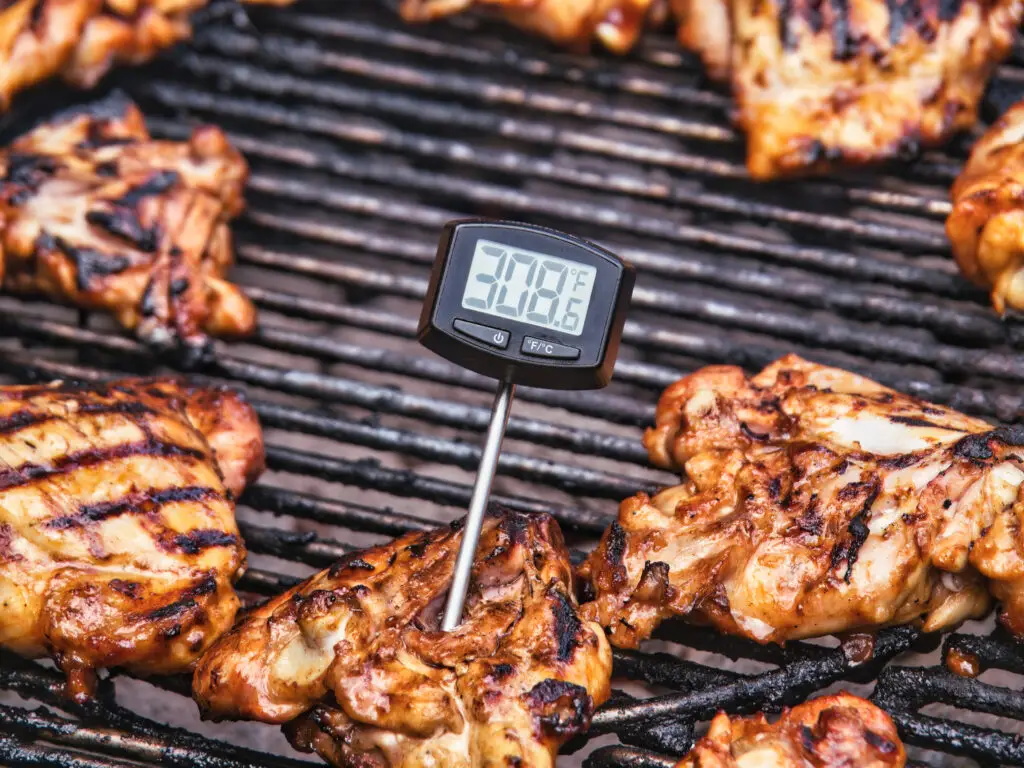
You don’t need to hover.
Dark meat should pull slightly from the bone and feel firm but not stiff. Breasts should feel springy, not hard.
If you cut into a piece and it’s not quite there yet, don’t panic. Move it back to indirect heat and give it a little more time.
Thermometers are your friend. An instant-read thermometer is a game-changer. Use them as a learning tool, and don’t freak out. 165ºF is the target, but a touch higher or lower is just fine. The chicken will continue to cook inside (by a few degrees) after you remove it from the grill and let it rest. For more helpful advice, check out When to Check Meat Temperature.
When to Sauce Chicken (and When Not To)
Sauce is a finishing move, not a starting one.
Most BBQ sauces contain sugar, and sugar burns fast. Season the chicken simply at the beginning. Add sauce during the last few minutes so it can set without burning. The Best Time to Add Sauce goes into a bit more detail here.
You’ll get better flavor and far fewer flare-ups.
What to Do If the Outside Looks Done but the Inside Isn’t
This happens all the time.
Move the chicken to a cooler part of the grill. Lower the heat if you can. Close the lid and give it time.
This small adjustment will get the job done.
A lot of great BBQ ideas start with fixing something that didn’t go quite right the first time.
You’re Closer Than You Think
Dark meat gives you confidence. Medium heat gives you control. Indirect heat is your friend. Sauce comes late.
Every time you grill chicken, you learn something. The next time gets easier. The food gets better.
Next time, you’ll pull perfect chicken off the grill. And the time after that, you won’t even think about it.
If this feels like your kind of BBQ…
Join the BBQ Crew below for practical BBQ tips, easy recipes, and backyard ideas that work.
No spam. Just good BBQ.