
If you’re wondering how much charcoal to use, here’s the honest answer:
Most everyday grilling only needs about half to one full chimney of charcoal.
Not half a bag. Not a full bag. Not whatever seems emotionally reassuring in the moment. Just enough fuel to match what you’re cooking.
Once you understand that charcoal is about heat management, not quantity, grilling gets a lot easier and a lot less stressful.
The Amount Depends More on Timing Than Food
Most people think charcoal quantity depends on what you’re cooking. It mostly depends on how long you’re cooking. Quick meals need a quick fire. Long meals need a sustained fire. That’s really the difference.
If dinner takes 15–20 minutes, you don’t need a mountain of fuel. If something takes 2 hours, you’re managing a fire, not just lighting one.
Once you start thinking this way, charcoal decisions get much easier. If you’re still getting comfortable with charcoal grilling, I break this down more in Grilling Basics for Regular People.
Briquettes vs Lump (Does It Change Things?)
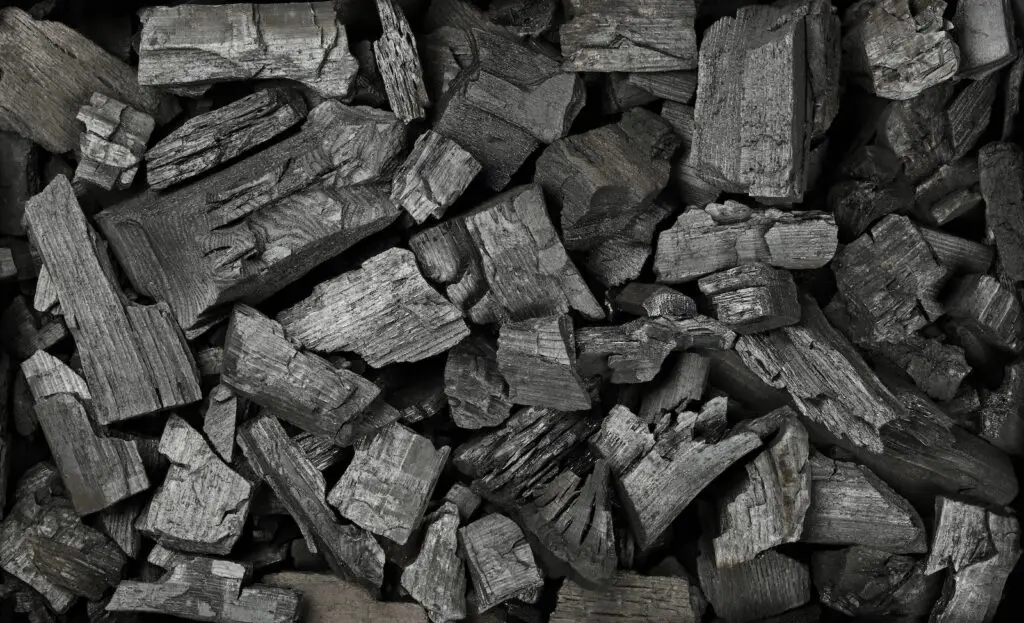
A little, but not dramatically. Briquettes burn more evenly and predictably. They’re great when you’re learning because they remove some guesswork.
Lump charcoal burns hotter and faster and can vary in size, which just means you sometimes adjust a little sooner.
Think of briquettes as steady and predictable. Lump charcoal is a little more energetic and a little less consistent.
Both make great food. Neither makes you a better or worse griller.
The Simple Rule Most Backyard Cooks Follow
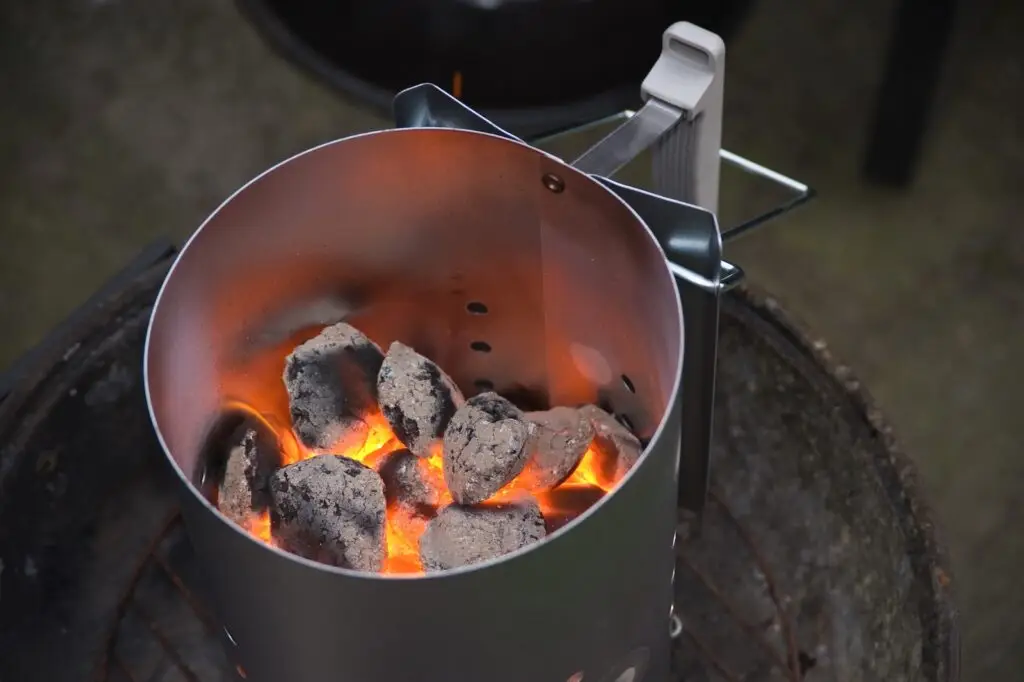
Instead of trying to measure charcoal by pounds or counting briquettes like you’re back in fourth grade trying to solve a word problem on a math test, most grillers just think in chimney starters.
If you don’t have a chimney starter yet, it’s one of the few BBQ tools that actually makes grilling easier instead of more complicated. They’re inexpensive, they light charcoal faster, and once you use one, you probably won’t go back. (I cover a few other tools that actually make a difference in BBQ Tools You Actually Need)
A chimney starter becomes your measuring cup.
As a simple starting point, here’s a practical cheat sheet based on common foods. These amounts roughly reflect how long those foods usually take to cook.
| What you’re cooking | Charcoal amount |
| Burgers / Hot Dogs / Vegetables | 1/2 chimney |
| Chicken Pieces / Pork Chops / Fish | 1/2 – 1 chimney |
| Steaks | 1 chimney |
| RIbs | 1 chimney + add more later |
| Smoking | 1-2 chimneys staged |
That’s the whole system.
You’re not trying to fill the grill. You’re trying to build the right fire. Most grills actually run better with less charcoal than people expect.
Why Most People Use Too Much Charcoal at First
Almost everyone starts by using too much charcoal.
Not because they’re doing it wrong. Because they’re trying to avoid running out of heat. Running out of heat feels like failure. Nobody wants to tell hungry guests dinner got delayed because the grill went out. So people overcorrect.
They dump in a ridiculous amount of charcoal and accidentally create a fire hot enough to forge medieval weapons or vaporize perfectly good burgers.
Then comes the real struggle: trying to reduce heat.
Adding heat is easy. Removing it is like trying to convince a toddler to eat their vegetables.
Starting smaller gives you control. You can always add heat. You rarely wish you had started with more chaos.
The Trick That Makes Charcoal Last Longer
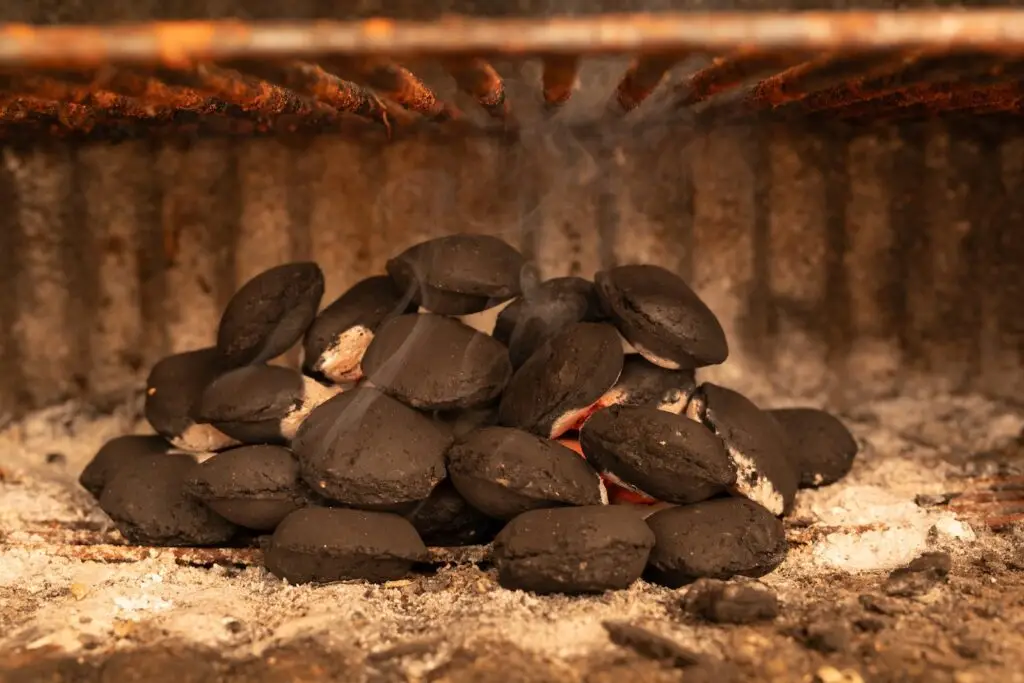
If you want your charcoal to work better without using more of it, stop spreading it evenly across the grill.
Instead, pile it on one side.
This creates two cooking zones:
- A hot side where the charcoal lives
- A cooler side where food can finish safely
If you haven’t tried this yet, my Direct vs. Indirect Heat guide shows exactly how it works. This one habit prevents more burned food than almost anything else beginners struggle with. It also makes you look like you know what you’re doing, which is a nice side benefit.
What Happens If You Guess Wrong
If you used too little charcoal, your grill will just cool down sooner. That isn’t failure. That’s just feedback.
Light another half chimney and add it.
If you used too much, just use your cooler zone and close the vents slightly to bring temperatures down. Every grill runs a little differently anyway.
Nobody nails this perfectly every time. Even experienced grillers occasionally adjust mid-cook.
The difference is they expect to.
The Confidence Rule Most People Eventually Learn
After a few cooks, something interesting happens.
You stop asking how much charcoal you need and start recognizing what your grill needs.
You notice how long heat lasts. You notice how food reacts. You stop reacting emotionally and start reacting practically.
And eventually you realize something most backyard cooks discover: You almost always need less charcoal than you think. And a lot less stress than you brought into the cook.
If you’re unsure, start with a half chimney. If food isn’t cooking fast enough, add more. If it’s cooking too fast, move it to the cooler side. After a few cooks, this stops feeling like guesswork and starts feeling like instinct. Adjust as needed. Pay attention. That’s really the whole process.
The goal isn’t mastering charcoal. It’s making dinner without worrying about it and actually enjoying the time you’re spending with the people you invited over instead of babysitting the grill.
If this feels like your kind of BBQ…
Join the BBQ Crew below for practical BBQ tips, easy recipes, and backyard ideas that work.
No spam. Just good BBQ.