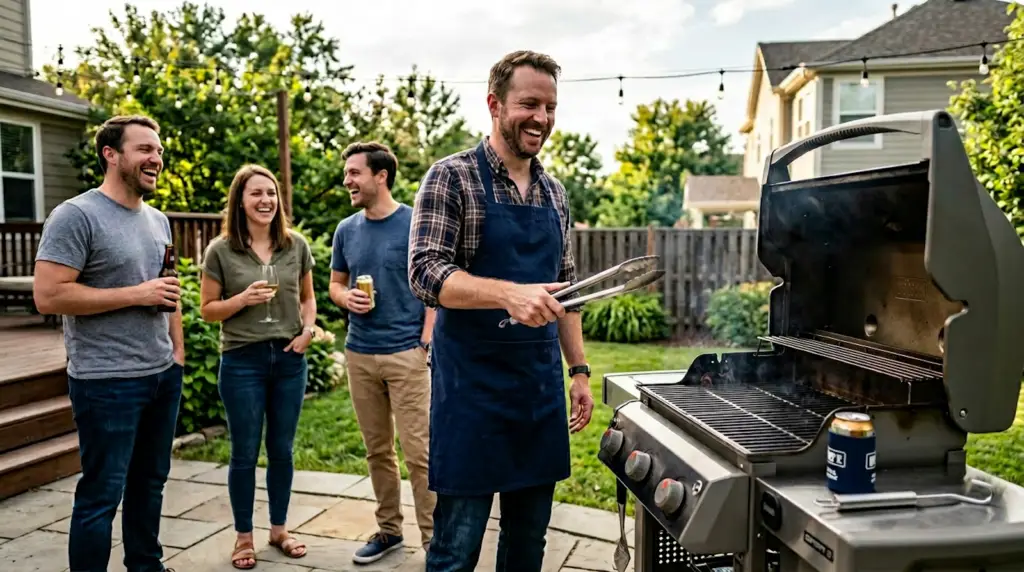

There’s a moment in almost every barbecue when things start to feel a little uncertain.
The meat looks good. The grill smells right. You’ve flipped it once, maybe twice, and nothing seems obviously wrong. But it’s been on for a bit, and that quiet voice of doubt starts to creep in.
So you grab the thermometer, poke the meat, and immediately regret it.
The number is lower than you expected. Way lower. Suddenly, your mind is filled with images of guests cutting into raw meat and spending the better part of the afternoon in the bathroom. Or worse.
That’s the most common thermometer mistake there is: checking too early.
Why Early Temperature Checks Create Problems
A thermometer is doing exactly what it’s supposed to do—it’s telling the brutal truth. The kind of truth that cuts you to the core, like when your partner pulls out their fashion police badge and writes a citation for that shirt with the stripes and paisleys you’re wearing.
The problem is that early in the cook, that truth isn’t very useful.
Meat takes time to come up to temperature, especially thicker cuts. When you check too soon, the number will almost always look disappointing. Chicken feels nowhere near done. Steak seems stubborn. Burgers feel like they’re refusing to cooperate. If burgers are your usual test case, how long to grill burgers gives you a simple timing baseline so you know when you’re actually close. The thermometer hasn’t revealed a problem; it’s just letting you know the grill has more work to do.
What checking too early really creates is doubt. And doubt is how people start flipping too much, opening the lid too often, or cooking longer than they need to “just to be safe.” That’s how good BBQ slowly dries out while you’re standing right there watching it.
The Right Time to Check
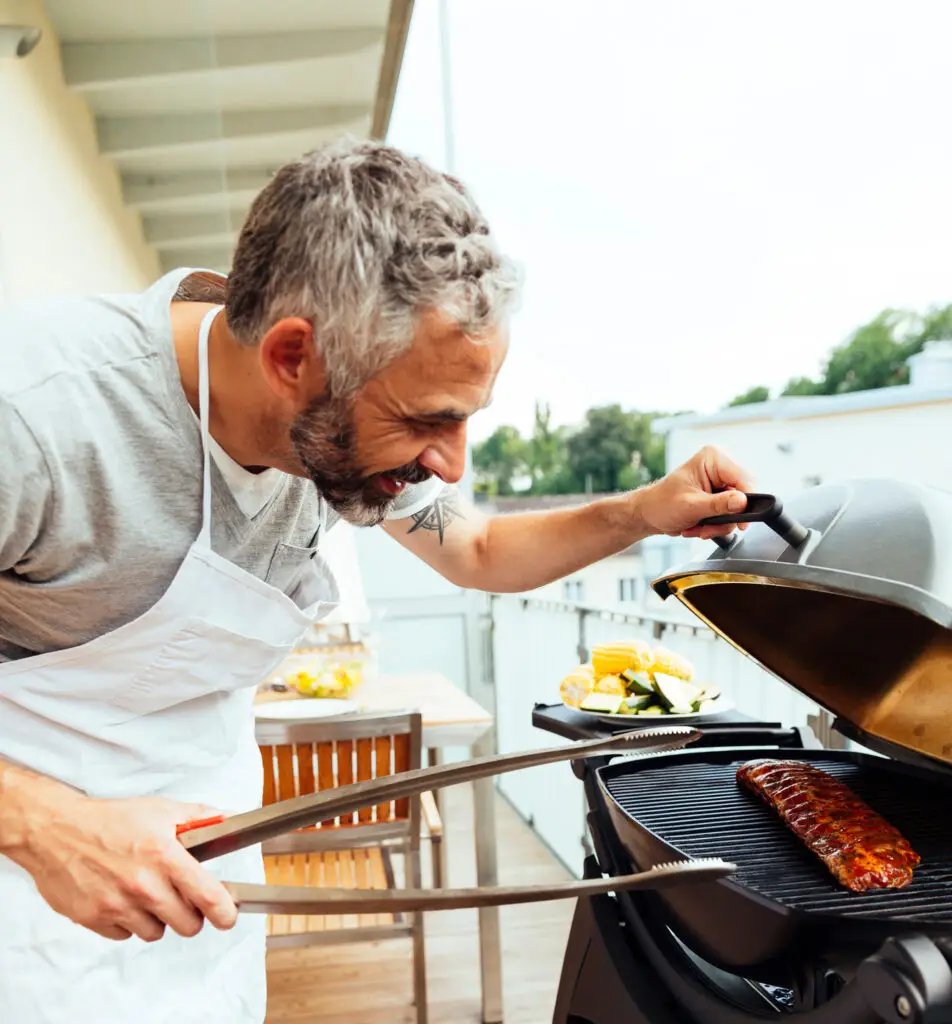
A simple rule of thumb: cook first, check later.
Let the grill do what grills do best. Let the surface develop. Let the heat settle in. When the meat looks close—when your instincts say, “Alright, we’re getting there”—that’s when the thermometer earns its keep. If you’re still building those instincts, grilling basics for regular people covers the fundamentals that make this easier.
At that point, you’re not asking the thermometer to make decisions for you. You’re using it to confirm what you already suspected. One quick poke in the thickest part, a number that tells you whether you’re close, and then you step back.
You’re not micromanaging the cook. You’re finishing it.
Why “Close Enough” Really Is Enough
Temperature isn’t a finish line you have to hit perfectly. It’s a range, and resting finishes the job.
If chicken is supposed to land at 165°F and you see 158 or 160, that’s not a crisis. It just means you’re early. Give it another minute or two. Let it rest. It’ll get where it needs to go without panic or intervention.
The same idea applies to steak, pork, and burgers. Being close means you still have control. Checking too early takes that control away by introducing unnecessary urgency.
And yes, there is a point where you can wait too long. But that usually isn’t subtle. If the outside looks fully cooked, has good color, and feels firm in that familiar way, that’s your cue to check. Waiting longer at that point doesn’t improve things; it just lets heat keep working after it’s already done enough.
When the Thermometer Becomes the Problem
Once you check too early and get spooked, it’s hard to stop. Another poke follows. Then another. The grill lid comes up every thirty seconds. Heat escapes, patience disappears, and suddenly the thermometer is running the barbecue instead of you.
That’s not better BBQ. That’s anxiety management with a stainless-steel probe.
The thermometer’s job is to reduce guessing, not replace it with a new form of stress.
The Rule That Actually Works
Check the temperature when you think the meat is almost done, not when you’re curious, bored, or asked how much longer it’s going to be.
When you think it’s close, check once. If you’re in the neighborhood, let it finish and then let it rest. The grill already did the hard work. Your job is knowing when to stop touching things.
Most BBQ mistakes aren’t about skill or gear. They’re about timing, especially when it comes to temperature checks. Wait a little longer, trust your instincts, and use the thermometer as confirmation instead of commentary.
That’s how you end up serving better food and enjoying the cook instead of stressing out the whole time. Relax.
If this feels like your kind of BBQ…
Join the BBQ Crew below for practical BBQ tips, easy recipes, and backyard ideas that work.
No spam. Just good BBQ.